Slate from Portugal

Porto Schiefer

Porto Schiefer is the German market designation for the Portuguese Ardósia de Valongo (Lousa de Valongo) — a muscovite-sericite slate more than 400 million years old, from the Ordovician, quarried in the Campo area near Valongo in the district of Porto in northern Portugal. It has an exceptionally fine-grained, evenly dark blue-grey to anthracite and black groundmass with a characteristic natural cleft texture. Also traded internationally as Porto Slate, Porto Black Slate, Ardósia de Valongo and Lousa Valongo; used for external facades, roofs (the classic slate application), paving, floor areas, stairs, skirtings, window sills and prestige building applications with a classically elegant dark character.

Slate Portugal 2.815 kg/m³
Available as: Slabs, Skirting, Tiles and flooring slabs
Other trade names: Ardoise de Porto ou Ard, Ardoise de Valongo, Bluish Slate ou Grey to Bluish Slate, InterSin980 wenn kalibriert, Lousa Valongo, Porto Schiefer ou Valongo Schiefer, Porto Slate, Porto Slate ou Valongo Slate, Valongo

About Porto Schiefer

Porto Schiefer shows an exceptionally even, calmly elegant slab character with the classic dark appearance of slate. The groundmass is a very fine-grained, almost powdery dark layer of muscovite (a pale mica), sericite (a very fine-grained muscovite mica) and subordinate dark minerals. The tone varies between dark grey, blue-grey and anthracite black — the characteristic “slate grey” of classic building slate. Distinctive is the natural cleft texture — the fine cleavage of the metamorphic rock produces naturally formed riven faces with subtle irregular micro-reliefs when the material is won. This natural texturing gives slate its characteristic tactile depth and lively appearance, which other flat building materials do not offer. The finishes currently available from stock are listed in the »Finishes« block further down this page. Under changing light, subtle metallic reflections from the embedded mica flakes can be seen.

In stock

Current availability from our warehouse.

Technical data

Guide values for the stone type, taken from manufacturer and test reports. Natural stone is a natural product — individual batches and slabs can differ. For critical applications, request slab-specific test data.

Rohdichte 2.815 kg/m³
Druckfestigkeit 187,0 MPa
Biegezugfestigkeit 56,9 MPa
Wasseraufnahme 0,43 %
Frostbeständig Nein

Suitability by application

Recommended with limitations

  • Außenbereich △ Limited

Finishes

Porto Schiefer is available in a range of finishes. The finish affects appearance, feel and the care it needs.

Spaltrau kalibriert

Wie spaltrau (natürlich gespaltene, raue Mattoberfläche), zusätzlich mit kalibrierter Rückseite: Die Plattenunterseite ist plan geschliffen für gleichmäßige Stärke und vereinfachte Verlegung. Empfohlen für Außenbereiche, Pflasterflächen und Fassadenverklebungen mit Anspruch an präzise Maßhaltigkeit.

Satiniert kalibriert

Wie satiniert (gebürstete Mattoberfläche mit subtiler Tiefe), zusätzlich mit kalibrierter Rückseite: Die Plattenunterseite ist plan geschliffen für gleichmäßige Stärke und vereinfachte Verlegung. Empfohlen für Bodenflächen, Treppenstufen und Verklebungen mit Anspruch an präzise Maßhaltigkeit.

Geschliffen C600 kalibriert

Wie geschliffen C600 (sehr feines Schliffbild mit deutlicher Farbintensität, kaum sichtbare Schleifspuren), zusätzlich mit kalibrierter Rückseite: Die Plattenunterseite ist plan geschliffen für gleichmäßige Stärke. Empfohlen für hochwertige Bodenflächen und Wandverkleidungen mit Anspruch an präzise Maßhaltigkeit.

Spaltrau

Die Oberfläche entspricht einer natürlichen Spaltung des Gesteins — die schiefertypische schichtige Charakteristik tritt voll zur Geltung. Matte, raue Anmutung mit hoher Rutschsicherheit und ursprünglich naturhafter Wirkung. Empfohlen für Außenbereiche, Mauerverkleidungen und stark beanspruchte Pflasterflächen.

Geschliffen C600

Sehr feines Schliffbild mit Körnung C600 — die ebene Oberfläche zeigt eine deutliche Farbintensität bei kaum noch sichtbaren Schleifspuren, fast wie polierte Tiefe in matter Wirkung. Im Vergleich zu poliert pflegeintensiver, aber visuell sehr nahe an der polierten Eleganz — eine feine Wahl für hochwertige Innenflächen.

Care & fabrication

As a Portuguese mica slate, Porto Schiefer is a robust hard rock with low water absorption (0.4 %), confirmed frost resistance (a 10 % loss of strength after 25 freeze-thaw cycles, with no changes in colour or structure) and exceptional flexural strength. Wine, lemon juice, vinegar, cola, bathroom cleaners or descalers leave no etch marks as they would on marble or limestone — the stone is acid-resistant and well suited to intensive everyday use.

For internal applications we recommend sealing on a silane or polysiloxane basis at first installation. On a riven surface, sealing is particularly worthwhile, because without it the micro-reliefs can hold dirt. The finishes currently available from stock are listed in the »Finishes« block further down this page. A sealer protects against deep penetration of oil, grease and pigments — otherwise discolouration can show up on the heterogeneous slate structure.

Routine care is with a pH-neutral natural stone cleaner and a soft cloth or microfibre mop. Clear warm water is usually sufficient. Acidic cleaners are not in themselves a problem (acid resistance as a silicate rock), but should nevertheless be avoided because they can attack the sealer. On textured riven surfaces, films of dirt are more visible than on smooth surfaces — regular cleaning with a soft brush in the fine relief structures is recommended.

Particularly important for slate: the Mohs hardness (3–4) means that slate is more sensitive to mechanical impact and sharp tools than granite (Mohs hardness 6–7). For external applications with potential loading (paving carrying vehicle traffic, external stairs with heavy traffic) you should choose a sufficient material thickness (at least 20–30 mm). Indoors, slate is sufficiently resistant for normal loading.

For kitchen worktops, Porto Schiefer is suitable with reservations — it is not fully cut- and scratch-resistant like granite or quartzite (Mohs hardness 3–4 vs. 6–7+). Heat resistance is given, but hot pans should not be set down directly (use trivets). The finishes currently available from stock are listed in the »Finishes« block further down this page. For a designer kitchen with a dramatic dark material effect and conscious care, however, Porto Schiefer can be highly expressive.

For roofs, Porto Schiefer is the classic application — its excellent frost resistance, low water absorption and natural cleavage make the stone the traditional choice for slate roofs in Mediterranean and central European climate zones. Correctly installed, a slate roof can last several centuries.

For external applications at ground level (paving, stairs, pool surrounds), the natural riven surface is ideal — it offers excellent slip resistance (coefficient of friction 0.6–0.8). In areas with frequent salt contact (de-icing salt, pool chlorine) we recommend refreshing the sealer every 2–3 years.

Frequently asked questions

What is Porto Schiefer geologically?

Porto Schiefer is an Ordovician muscovite-sericite slate from the Valongo slate belt in the district of Porto in northern Portugal. The stone was formed around 400 million years ago from clayey sediments transformed into a slate by high-grade metamorphism. The quarries lie in the Campo area near Valongo, a traditional slate quarrying area since Roman antiquity. At ROSSITTIS we classify Porto Schiefer in the slate family.

What synonyms are there?

In international trade, Porto Schiefer also runs under the designations Ardósia de Valongo (the original Portuguese name — 'slate of Valongo'), Lousa de Valongo, Porto Slate (English), Porto Black Slate and Lousa Valongo Porto Slate. The German designation 'Porto Schiefer' refers to the nearby port city of Porto and has become established on the German-speaking market.

What technical values does Porto Schiefer have?

Exceptionally strong values for a slate: bulk density 2,820 kg/m³ (very high), compressive strength 187 MPa, compressive strength after frost 168 MPa (very good frost resistance), flexural strength an exceptional 56.9 MPa (well above typical granite values), water absorption 0.4 %, apparent porosity 1.2 %, abrasion resistance 6.3 mm (Amsler-Laffon), Mohs hardness 3–4. After 25 freeze-thaw cycles, test samples showed no changes — frost resistance is outstandingly confirmed.

What finishes are available in Porto Schiefer?

The finishes currently available from stock are listed in the »Finishes« block on this page.

Is Porto Schiefer suitable for roofs?

Outstandingly suited — and this is in fact the classic application of slate. The excellent frost resistance (DNSA-confirmed by 25 freeze-thaw cycles with no changes), the low water absorption (0.4 %) and the natural cleavage make Porto Schiefer the traditional choice for slate roofs in Mediterranean and central European climate zones. Correctly installed, a slate roof can last several centuries.

Is Porto Schiefer suitable for a kitchen worktop?

Suitable with reservations, and with limitations. At Mohs hardness 3–4, Porto Schiefer as a mica slate is markedly more sensitive than granite or quartzite (Mohs hardness 6–7+) — it is not fully cut- and scratch-resistant. Heat resistance is given, but hot pans should not be set down directly (use trivets). The riven surface can show micro-spalling at edges — for kitchen worktops we recommend the honed or satin-honed variant. For a designer kitchen with a dramatic dark material staging and careful maintenance, however, Porto Schiefer can be highly expressive.

Is Porto Schiefer suitable for external paving?

Yes, outstandingly suited. The high compressive strength (187 MPa), the exceptional flexural strength (56.9 MPa — one of the highest values among all European slates), the excellent frost resistance and the natural riven surface with its high slip resistance (coefficient of friction 0.6–0.8) make Porto Schiefer a dependable choice for demanding paving, external stairs, pool surrounds and heavily frequented public external areas. For paving carrying vehicle traffic we recommend slab thicknesses of at least 20–30 mm.

How do I clean and care for Porto Schiefer?

As a Portuguese mica slate, Porto Schiefer is acid-resistant and therefore easy to look after: daily care with a pH-neutral natural stone cleaner and a microfibre cloth is sufficient. We recommend sealing at first installation, particularly on the riven surface; for internal applications, a refresh interval of 5–8 years depending on use, and for external applications check it every 3 years. On textured riven surfaces, regular cleaning with a soft brush in the relief structures is recommended.

Projects using Porto Schiefer

Projects in which Porto Schiefer has been used successfully.

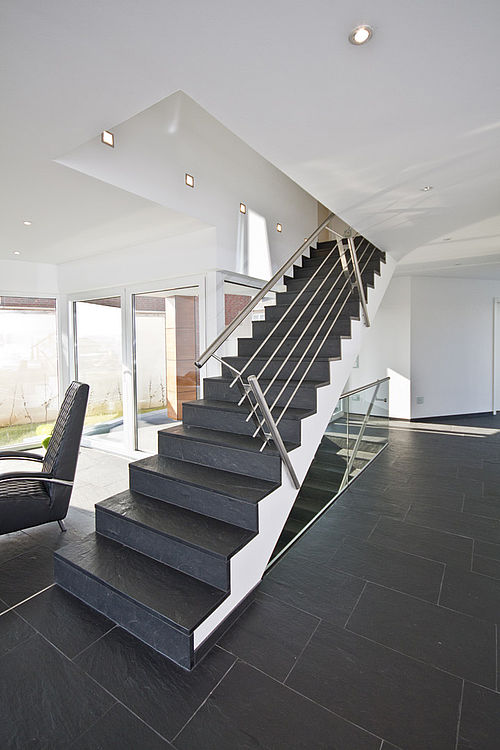
Porto Schiefer Treppen

Porto Schiefer

Kiehlmann Naturstein

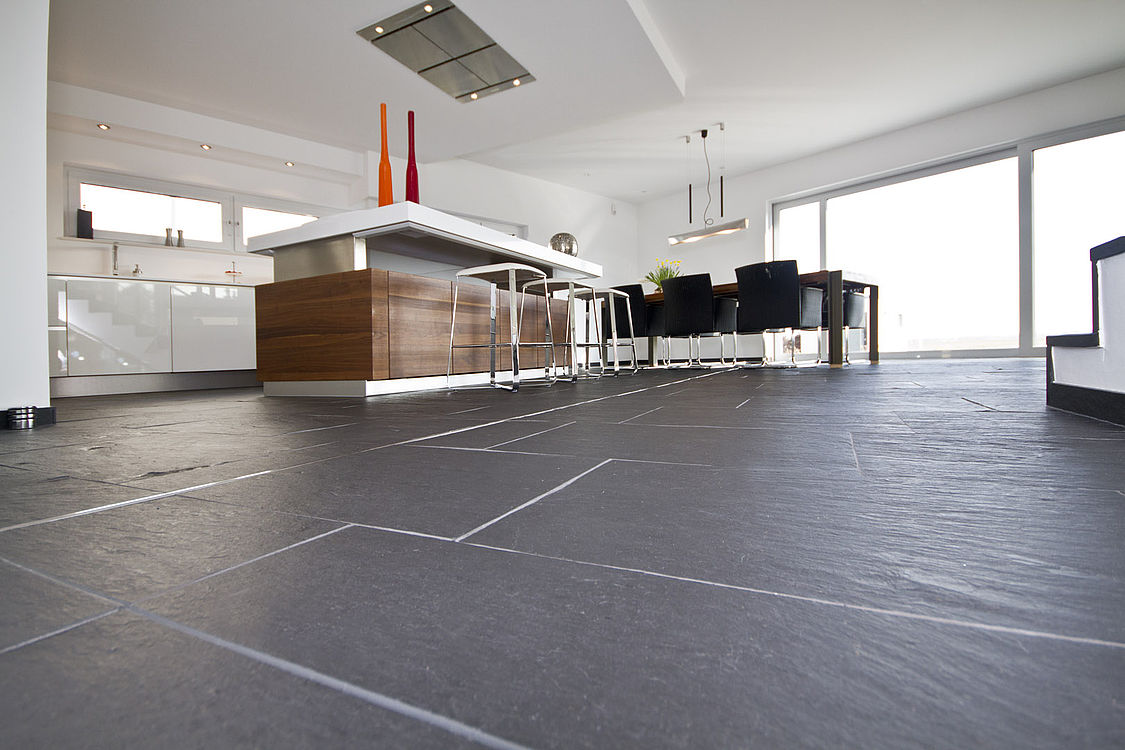
Porto Schiefer Böden

Porto Schiefer

Kiehlmann Naturstein

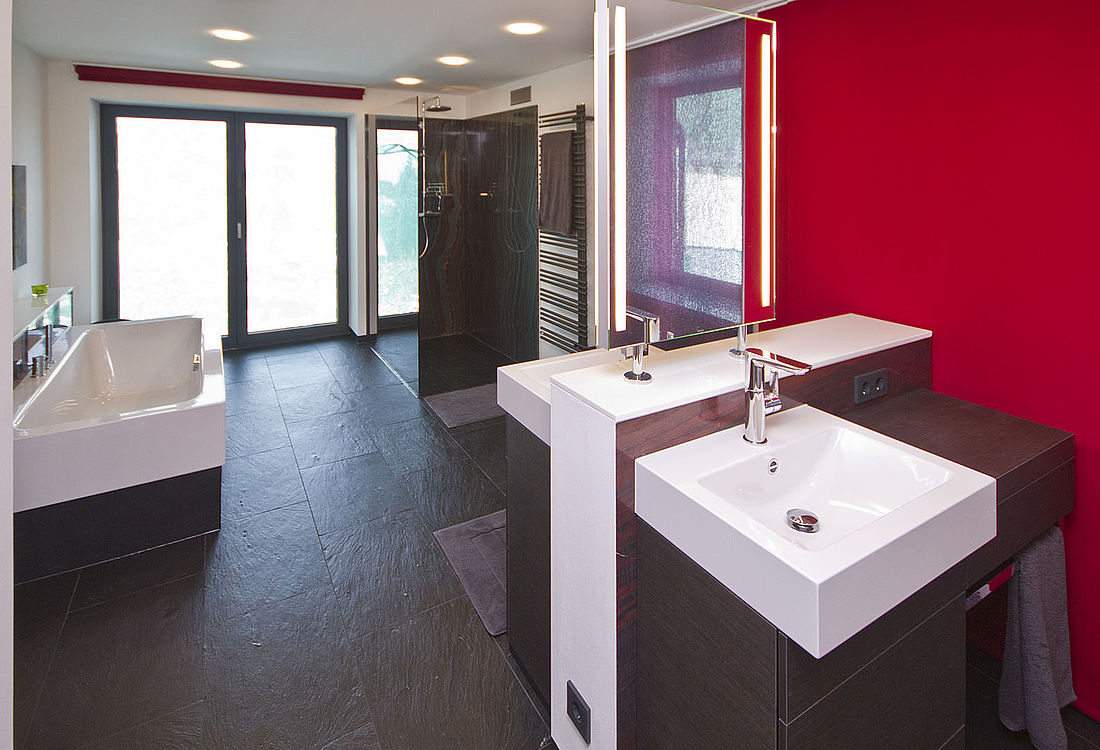
Porto Schiefer / Iron Red Bäder

Porto Schiefer / Iron Red

Scholz Naturstein

Check the live stock Request an appointment