
Agglomerate

CTX BasicAgglo® New Micro Sivec

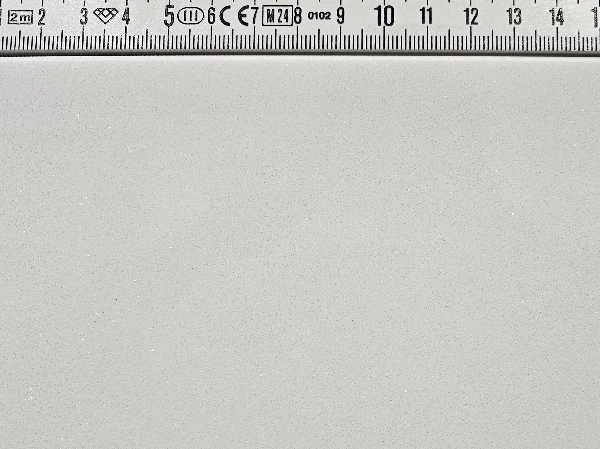
CTX BasicAgglo® New Micro Sivec is an almost pure white marble agglomerate with a fine, even micro-grain structure (grain size approx. 0.7–2 mm). The chip aggregate is calcitic Sivec marble from the Prilep region in North Macedonia, bound in a pale polyester resin matrix. At ROSSITTIS we fabricate the large-format slabs into window sills, interior stairs, wall claddings, vanity tops, skirtings and made-to-measure interior components.

An industrial resin-bonded marble agglomerate material from the CTX BasicAgglo collection (Civet, Italy), based on white Sivec marble chippings from Prilep, North Macedonia – not a naturally formed stone.

Agglomerate
Available as: Slabs, Skirting · 16 of 1237 reserved
Other trade names: Micro Carrara fine grain, Micro Sivek, Micro White AS, Micro White fein, PX0014, RO-22-237

About CTX BasicAgglo® New Micro Sivec

Background. CTX BasicAgglo® is the agglomerate collection of the Italian manufacturer Civet (CTX), produced by the classic vacuum vibro-compaction process based on the Bretonstone® principle. Natural stone chippings are mixed with roughly 6–10 % polyester resin, pigments and additives, spread out under vacuum to form a slab, compacted and polymerised in a warm curing oven. The end product is a highly compacted, permanently dimensionally stable large-format slab with the look of a finely patterned marble, considerably more predictable, more flexurally strong and less prone to rejects than a natural slab.

In stock

Current availability from our warehouse.

1237 quartz composite slabs in stock — 1221 available now, 16 reserved · plus 70 blocks

Thicknesses: 1.2–3 cm · Finishes: Polished · Available as: Slabs, Skirting

Updated daily from our live stock.

Finishes

CTX BasicAgglo® New Micro Sivec is available in a range of finishes. The finish affects appearance, feel and the care it needs.

Polished

The highest possible gloss with pronounced colour intensity — the level and easiest-to-maintain surface in the agglomerate segment. The mirror-smooth finish shows the composite material's composition to full advantage. A prestigious choice for kitchen worktops, wall claddings and designed feature surfaces in interior fit-out.

Care & fabrication

Cleaning. Day to day, warm water, a soft cloth and a neutral to mildly alkaline pH cleaner are enough. Soapy marble or engineered-stone cleaners, or diluted all-purpose cleaners without acid, are suitable. Wipe up spilled liquids (wine, coffee, juices, oil) promptly, because the resin-bound marble aggregate can draw in pigment in spots.

Do not use. Limescale and sanitary cleaners, acetic and citric acid, drain cleaners, toilet cleaners, cement and rust removers, highly concentrated all-purpose cleaners and chlorine-based bleaches are off limits – they attack both the marble chippings (carbonate reacts with acid) and the polyester resin and leave dull patches. Avoid solvent-based products (acetone, petrol, thinners) as well; they can soften the binder.

Impregnation. A classic natural stone impregnation is not strictly necessary – the polyester matrix largely seals the slab. In uses with a raised risk of staining (open-plan kitchen, vanity top, bar) we nevertheless recommend a light, non-film-forming silicate- or silane-based stone impregnator as additional sealing protection, above all on the honed version.

Kitchen. Polished surfaces tolerate brief kitchen use but are not thermally resistant to hot pans: always use trivets and keep sustained heat (oven, dishwasher) away by design. Use chopping boards – the material is hard, but polyester resin can go dull along knife marks over time.

Bathroom. New Micro Sivec works well in the bathroom (vanity top, wall cladding, shower). Consistently avoid acidic care products (anti-limescale sprays!), because on pale marble aggregates they leave visible shadows. In the shower area, wipe standing water away promptly so that no limescale film builds up.

Outdoors and frost. Not suitable for exterior construction. UV radiation yellows the resin over the long term, and freeze-thaw cycles can cause micro defects. Nor is it to be recommended where there is direct sunlight in conservatories or open loggias.

Scratches and repair. Superficial scratches on the polished version can be re-polished by a stonemason, deeper damage repaired with polyester filler and matched pigment. Colour-accurate touch-up is often more feasible with agglomerates than with natural stone, because the mix can be reproduced.

Frequently asked questions

What is CTX BasicAgglo® New Micro Sivec in geological and technical terms?

It is a resin-bound marble agglomerate made by the Italian manufacturer Civet. Natural stone chippings of white Sivec marble (Prilep region, North Macedonia) in the micro grain size (≈ 0.7–2 mm) are compacted with roughly 6–10 % polyester resin into large-format slabs using the Bretonstone® vacuum process. The end product is not a naturally formed stone but an industrial engineered stone with the character of marble.

What does the prefix “New” mean compared with the classic Micro Sivec?

“New” stands for a revised generation of the formula with a slightly lighter, more neutral resin and pigment balance. Slab formats, thicknesses and the fabrication profile remain the same; from a distance the New slab looks somewhat whiter and calmer than the older version.

How does New Micro Sivec differ from genuine Sivec marble?

Natural Sivec stone from Prilep stays brighter and livelier and shows the characteristic carbonate shimmer. The agglomerate is more uniform, more flexurally strong, considerably lower in water absorption across the slab as a whole and dependable to plan with in series fit-out. Anyone looking for natural individuality takes the marble; anyone who needs a predictable, repeatable appearance takes the agglomerate.

Is this engineered stone suitable for exterior surfaces?

No, clearly not. Polyester binders yellow under UV radiation and react more sensitively to freeze-thaw cycles than natural stone. New Micro Sivec is designed as an interior material and should also not be permanently installed in fully sunlit conservatories or open loggias.

How heat-resistant is the surface in the kitchen?

Only to a limited degree. The engineered stone tolerates brief warmth, but never set down hot pots, pans or baking trays directly. Above sustained temperatures of around 80–90 °C the binder can soften, bleach out or develop stress cracks. In kitchens we recommend use with trivets and a light stone impregnator as additional protection against grease and juices.

Which cleaners may I use on New Micro Sivec?

Permitted are warm water, neutral to mildly alkaline stone care products and mild all-purpose cleaners without acid. Off limits are acetic, citric and hydrochloric acid, limescale removers, anti-limescale sprays, cement and rust removers, chlorine-based bleaches and solvents such as acetone or thinners.

In which slab formats and thicknesses does ROSSITTIS supply?

Civet's standard format is around 305 × 144 cm or 320 × 160 cm in 2 and 3 cm thicknesses. From these we produce cut-to-size workpieces (window sills, stairs, vanity tops, wall claddings, skirtings) including profiling and sealing.

How do I repair scratches and damage?

Superficial marks on the polished version can be re-polished by a stonemason; deeper damage can be made good with tinted polyester filler and then polished back. The advantage over a natural slab: because the material is mixed industrially, colour-accurate repairs are usually well within reach.

What does CTX BasicAgglo® New Micro Sivec cost?

The price depends on the format, thickness, surface finish and fabrication — there is no serious flat rate per square metre. Business customers see prices once their B2B account is activated; private customers receive a complete quote through a fabricator near them.

Check the live stock Request an appointment