Sandstone from India

Desert Stone

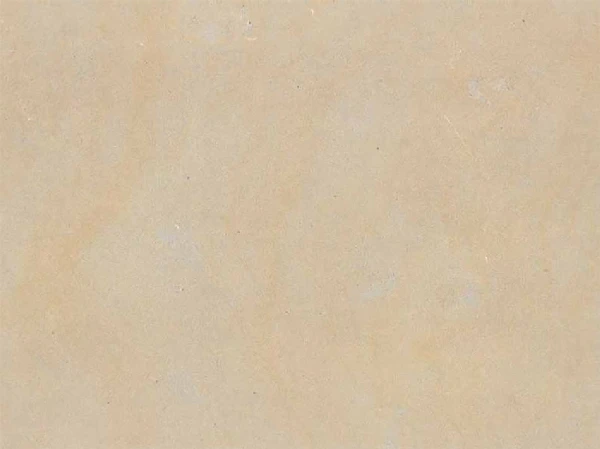
Desert Stone is an Indian sandstone in a warm red-brown to terracotta-orange ground tone with a characteristically fine sedimentary structure. Its high quartz content makes it technically particularly robust — good frost resistance, high compressive strength and acid resistance. A warm, natural choice for facades, floor areas, stairs and warm Mediterranean interiors.

Indischer Sandstein (klastisches Sedimentgestein) wahrscheinlich aus Rajasthan. Mineralisch dominiert von Quarz-Sandkörnern mit Hämatit/Limonit-Pigmentierung (für die rotbraune Färbung) und Kieselsäure-Zementierung. Charakteristisch ist der hohe Quarzanteil, der dem Material überdurchschnittlich gute technische Eigenschaften für seine Materialklasse verleiht: höhere Druckfestigkeit, niedrigere Wasseraufnahme, bessere Frost-Tau-Wechsel-Beständigkeit und geringere Säureempfindlichkeit als Standard-Sandsteine.

Sandstone India
Available as: Slabs, Paving slabs, Tiles and flooring slabs

Other trade names: BOSS 4.3

About Desert Stone

Desert Stone is a red Indian sandstone from northern India — probably from Rajasthan, the world's most productive sandstone province, accounting for over 90 % of global sandstone production. Geologically it is a clastic sedimentary rock whose original sand grains were bonded into a solid dimension stone during diagenesis, under pressure and through cementing solutions (primarily silica and iron oxide). The warm red-brown to terracotta-orange tones arise from haematite and limonite pigmentation of the quartz sand grains — iron oxide compounds that became embedded in the grain framework during sedimentation and diagenesis.

In stock

Current availability from our warehouse.

Finishes

Desert Stone is available in a range of finishes. The finish affects appearance, feel and the care it needs.

Geschliffen C220

Mattes Erscheinungsbild durch feinen Schliff mit Körnung C220 — die ebene Oberfläche wirkt ruhig, leichte Schleifspuren möglich. Im Vergleich zu poliert pflegeintensiver, dafür mit charaktervoller, naturhafter Anmutung. Wahl für Sandstein-Bodenflächen und Wandverkleidungen mit Wunsch nach mattmediterraner Wirkung.

Geflammt + 1 x gebürstet

Die Oberfläche wird durch Hitze aufgeraut und einmal gebürstet — scharfkantige Mineralreste werden geglättet, loses Material entfernt. Etwas sanftere Haptik als rein geflammt, weiterhin rutschhemmend, Farbe weniger intensiv als poliert. Empfohlen für Außenbereiche, Terrassen und stark beanspruchte trittsichere Flächen.

Care & fabrication

Desert Stone is a dense, quartz-rich sandstone with above-average technical properties for its material class.

Daily cleaning: a soft cloth or soft mop, clear water and a pH-neutral natural stone cleaner. Avoid acidic cleaners and descalers — even though the high quartz content offers protection, the carbonate and iron oxide constituents in sandstones are not fully acid-resistant.

Sealing: on polished and fine surfaces, recommended every 12–18 months depending on loading. The finishes currently available from stock are listed in the »Finishes« block further down this page.

Kitchen worktop: possible but not the first choice — as a material class, sandstone is less easy to look after than granite or quartzite. Better suited to wall applications, vanity tops and prestige areas.

Facade and external floor area: frost-capable when properly installed and drained (considerably better than standard sandstones thanks to the high quartz content). Use de-icing salt sparingly in winter.

The finishes currently available from stock are listed in the »Finishes« block further down this page. Cleaning with warm water and a microfibre cloth.

Stain treatment: wipe up fresh splashes (wine, coffee, tomato sauce, oil) immediately. Where stains have penetrated non-sealed areas, work with specialist sandstone stain removers.

Repair: scratches and matt patches can be evened out by proper regrinding. The fine-grained structure conceals small damage well visually.

Frequently asked questions

Where does Desert Stone come from?

From northern India, probably from Rajasthan — the world's most productive sandstone province. Indian sandstones have been among the most exported dimension stones worldwide for centuries.

What does the high quartz content mean for Desert Stone?

The high quartz content gives Desert Stone above-average technical properties for its material class: higher compressive strength, lower water absorption, better freeze-thaw resistance and lower acid sensitivity than standard sandstones. That makes Desert Stone particularly well suited to external applications.
Is Desert Stone suitable for external stairs?

Yes, excellently. With the flamed-and-brushed finish the material delivers outstanding slip resistance, and thanks to the high quartz content it is also well frost-resistant. A recommendable choice for external steps, pool surrounds and garden paths.

What finishes are available?

The finishes currently available from stock are listed in the »Finishes« block on this page.

Desert Stone or red granite?

Red granite (New Imperial Red, Multicolour Red) is markedly harder (Mohs 6 rather than around 3–4) and more acid-resistant, but often cooler and more even in colour. Desert Stone has the authentically warm desert character of a sandstone with a softer, sedimentary character typical of natural stone. Which choice suits depends on the desired colour temperature and loading profile.

How much material do you currently have in stock?

We currently carry 32 slabs of Desert Stone in 12 mm, 20 mm and 30 mm thicknesses with the two standard finishes. For larger projects we recommend reserving material promptly.

Projects using Desert Stone

Projects in which Desert Stone has been used successfully.

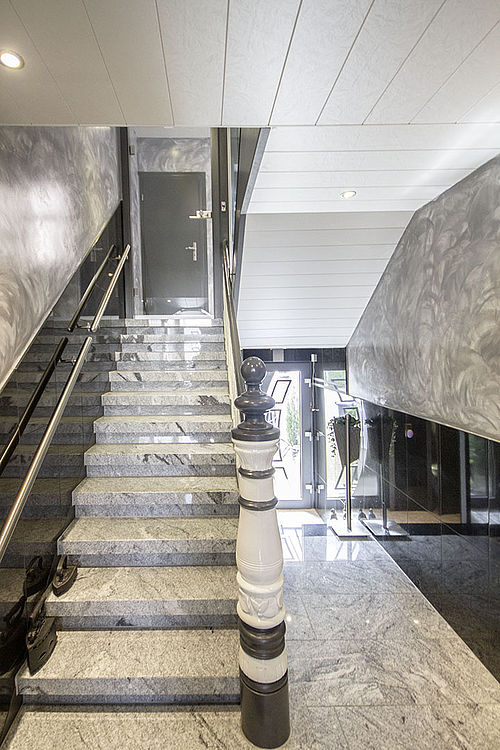
Viscont White / Devil Black Treppen

Viscont White / Devil Black

Burandt Natursteine

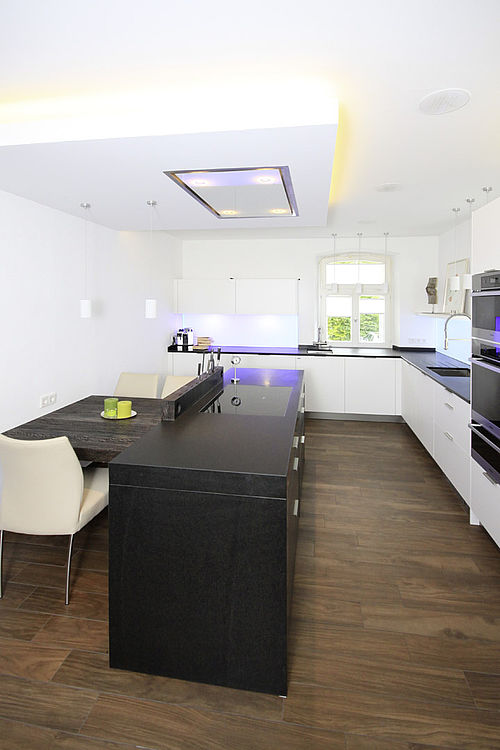
Devil Black Küchen

Devil Black

Seibold Naturstein

Check the live stock Request an appointment