Gabbro from South Africa

Listed in our range under Granite.

Impala

Impala is one of the most widely used dark building stones in the world — a dense, medium-grained South African norite from the Bushveld Igneous Complex region near Rustenburg in North West Province, with an evenly anthracite-grey to almost black groundmass, black pyroxene crystals and subtly distributed silver-grey-white plagioclase mineral points. Also carried internationally as Nero Impala, Impala Black, Rustenburg Granite, African Grey and Bon Accord; used for external façades, paving, terrace slabs, floor surfaces, stairs, bar counters, kitchen worktops, skirtings and prestige building applications with a timelessly elegant character.

Impala ist petrographisch ein Norit (basisches magmatisches Tiefengestein der Gabbro-Familie) — kein klassischer Granit im strengen petrographischen Sinn. Die Hauptmineralien sind Plagioklas-Feldspat (Labradorit), Orthopyroxen (Hypersthen) und Klinopyroxen, was die ungewöhnlich hohe Rohdichte von rund 2.950 kg/m³ und die dunkle Färbung erklärt. Im internationalen Handel wird der Stein traditionell als 'Granit' geführt, weil er in Verarbeitung und mechanischen Eigenschaften wie ein klassischer Hartstein gehandhabt wird. Bei ROSSITTIS klassifizieren wir Impala handelsüblich in der Granit-Familie gemäß weit verbreiteter Trade-Konvention für südafrikanische Norite und Gabbros aus dem Bushveld-Komplex.

Gabbro South Africa Frostbeständig Säurebeständig 2.950 kg/m³
Available as: Slabs, Skirting, Paving slabs, Tiles and flooring slabs · 15 of 1182 reserved

Other trade names: Impala Black, Impala MD, Impala Rustenburg, Impala Scuro, Nero Impala

About Impala

Impala shows an exceptionally even, calm slab appearance with a classic dark character. The groundmass consists predominantly of dark anthracite-grey to almost black zones with evenly, finely distributed mineral points. The main minerals are grey to black pyroxene (hypersthene, augite), plagioclase feldspar (usually as fine labradorite crystals) and accessory magnetite. The finishes available from stock are listed in the »Finishes« block further down. The mineral structure is isotropic (without direction) — no pronounced veining, no bedding, no preferred orientations. The overall effect is calm, powerful and reliable in planning terms — the stone delivers an exceptional block-to-block consistency that makes it particularly attractive for large-area façade and floor applications.

In stock

Current availability from our warehouse.

Technical data

Guide values for the stone type, taken from manufacturer and test reports. Natural stone is a natural product — individual batches and slabs can differ. For critical applications, request slab-specific test data.

Rohdichte 2.950 kg/m³
Druckfestigkeit 207,0 MPa
Biegezugfestigkeit 22,6 MPa
Wasseraufnahme 0,10 %
Frostbeständig Ja
Säurebeständig Ja

Suitability by application

Particularly suited to

Finishes

Impala is available in a range of finishes. The finish affects appearance, feel and the care it needs.

Poliert

Politur ist die klassischste Veredelung im Hartgesteinsegment — eine spiegelglatte, hochglänzende Oberfläche mit höchstmöglicher Farbintensität und maximaler Tiefenwirkung der Mineralstruktur. Als säurebeständiges Silikatgestein ist polierter Granit pflegeleicht und für Küchenarbeitsplatten, Wandverkleidungen und repräsentative Sichtflächen erste Wahl.

Satiniert

Die satinierte Oberfläche entsteht durch Bürsten, das weichere Minerale gezielt entfernt und der Fläche eine leichte Tiefe gibt. Mattes Erscheinungsbild mit subtiler Lichtreflexion und haptisch warmer Wirkung. Pflegeleicht, kratzunempfindlich und alltagstauglich — beliebte Alternative zur Politur in modernen Küchen und Wohnräumen.

Geschliffen C120

Mattes Erscheinungsbild durch groben Schliff mit Körnung C120 — die ebene Oberfläche zeigt eine zurückhaltendere Farbintensität als poliert und kann sichtbare Schleifspuren tragen. Im Vergleich zur Politur pflegeintensiver, aber stilistisch ruhiger; bevorzugte Wahl für moderne Innenarchitektur mit reduzierter Reflexion.

Eco Antik

Die Eco-Antik-Oberfläche wird geflammt und intensiv gebürstet — es entsteht eine rustikalere, lebhaftere Optik mit ausgeprägter Haptik. Empfohlen für Küchen sowie innenliegende Wand- und Bodenverkleidungen, in denen das Material als charaktervoller Statement-Stein mit handwerklicher Anmutung wirken soll.

River finish

Die Oberfläche wird durch Wasserdruck aufgeraut und anschließend farbvertiefend behandelt — der Farbton tritt dadurch stärker hervor als bei der geflammt-gebürsteten Variante. Empfohlen für Außenbereiche, Terrassen und Fassadenverkleidungen, in denen eine plane, rutschhemmende Oberfläche mit kräftiger Farbtiefe gefragt ist.

Geflammt + 1 x gebürstet

Die Oberfläche wird durch Hitze aufgeraut und einmal gebürstet, um scharfkantige Mineralreste zu glätten und loses Material zu entfernen. Etwas sanftere Haptik als rein geflammt, weiterhin rutschhemmend, Farbe weniger intensiv als poliert. Standardwahl für Außenbereiche, Terrassen und stark beanspruchte Bodenflächen.

Care & fabrication

As a South African norite, Impala is an exceptionally robust hard stone with extremely low water absorption (0.1 %), full frost and acid resistance and very high compressive and flexural strength. Wine, lemon juice, vinegar, cola, sanitary cleaners or descalers leave no etch marks as they would on marble or limestone — the stone is considerably easier to maintain and is ideally suited to intensive everyday use.

For internal applications we recommend a light silane- or polysiloxane-based sealer at first installation. With the exceptionally low water absorption of 0.1 %, Impala is practically non-absorbent — the sealer serves more as additional insurance against grease rings than as necessary protection. On polished surfaces, renewal every 8–10 years is sufficient; on heavily used kitchen worktops or external applications, check every 3–5 years.

Daily care is carried out with a pH-neutral natural stone cleaner and a soft cloth or microfibre mop. Clear warm water is usually sufficient. Acidic cleaners are unproblematic in principle (the stone is acid-resistant), but should nonetheless not be used, because they can attack the sealer. The finishes available from stock are listed in the »Finishes« block further down.

For kitchen worktops, Impala is outstandingly suitable: exceptionally cut- and scratch-resistant, insensitive to heat (hot pots and pans can be set down directly for short periods, but prolonged heat exposure above 250 °C should still be avoided), acid-resistant and with excellent stain repellency. The high flexural strength (22.6 MPa) makes the stone particularly suitable for long slab overhangs on kitchen islands or bar counters. The dark base tone does, however, show crumbs, flour and food residues more clearly than pale selections — that is an aesthetic question, not a material disadvantage. The finishes available from stock are listed in the »Finishes« block further down.

For external applications, Impala is particularly well qualified: the DIN/EN-confirmed values (compressive strength 207 MPa, water absorption 0.1 %, frost resistance) make the stone the first choice for demanding external façades in heavily weather-loaded positions, paving with high traffic loading, pool areas and applications with freeze-thaw and de-icing salt loading. The finishes available from stock are listed in the »Finishes« block further down.

For pool surrounds, external terraces and fountain surrounds, a slip-resistant textured finish is essential — polished external surfaces present a high risk of slipping when wet. In areas with frequent salt contact (de-icing salt, pool chlorine), refreshing the sealer every 3–5 years is entirely sufficient (less frequently needed on dense stones with low water absorption). In hot climate zones the dark base tone stores a great deal of solar energy — on external surfaces used barefoot, such as pool surrounds, this can lead to uncomfortable surface temperatures in Mediterranean or subtropical climates.

Frequently asked questions

What is Impala geologically?

Impala is petrographically a norite — a basic igneous plutonic rock of the gabbro family from the Bushveld Igneous Complex in South Africa. The Bushveld complex is one of the largest layered igneous intrusions on Earth, formed around 2 billion years ago. The main minerals are plagioclase feldspar (labradorite), orthopyroxene (hypersthene) and clinopyroxene. The quarries lie in the Rustenburg region in North West Province, South Africa. In international trade the stone is traditionally carried as 'granite'; at ROSSITTIS we classify it in the customary trade manner in the granite family.

What synonyms are there?

In international trade, Impala also runs under the designations Nero Impala (the principal Italian designation), Impala Black (the English trade name), Rustenburg Granite (after the quarry location), African Grey, Bon Accord (after a particular quarrying area) and occasionally just 'Impala'. The designation 'Impala' refers to the South African national animal, an antelope species of the region. All designations refer to the same South African norite from the Bushveld province.

Which technical values does Impala have?

Exceptionally strong values: bulk density 2,947–2,953 kg/m³ (markedly higher than typical granite, roughly 9 % heavier), compressive strength 207 MPa (very high), flexural strength 22.6 MPa (exceptional), water absorption 0.1 % (extremely low), abrasion resistance 19.3 mm Böhme, Mohs hardness 6–7. Full frost and acid resistance. These values make Impala one of the mechanically highest-performing commercially traded natural stones in the world.

Is Impala really a granite?

In the trade, Impala is carried as 'granite' — a trade convention common in the stone industry for dark hard stones that are handled like classic granites in fabrication. Petrographically, however, Impala is a norite (a basic igneous plutonic rock of the gabbro family). The difference: norite contains considerably more dark minerals (pyroxenes, plagioclase) than a true granite, which explains the darker colour and the unusually high density of around 2,950 kg/m³. At ROSSITTIS we classify the material in the customary trade manner as a granite, in line with the widespread trade convention.

Is Impala suitable for a kitchen worktop?

Outstandingly suitable — it is regarded as one of the best stones for kitchen worktops of all. With Mohs hardness 6–7, extremely low water absorption (0.1 %), exceptionally high compressive strength (207 MPa) and flexural strength (22.6 MPa) and full acid resistance, the stone is cut-, scratch- and heat-resistant and does not absorb the acids in wine, lemon or vinegar. The high flexural strength qualifies the stone for long slab overhangs on kitchen islands. The dark base tone shows crumbs and flour more clearly than pale selections — an aesthetic matter, not a material one.

Which finishes are available for Impala?

The finishes available from stock are listed in the »Finishes« block on this page.

Is Impala suitable for external façades?

Outstandingly suitable — it is one of the most widely used dark façade stones in the world. The DIN/EN-confirmed values (compressive strength 207 MPa, water absorption 0.1 %, frost resistance) and the high block-to-block consistency make Impala the first choice for demanding external façades, paving, pool areas and applications with freeze-thaw and de-icing salt loading. The stone has proved itself over decades on countless buildings in Europe, North America and Asia.

Where does Impala come from?

Impala comes from the Bushveld Igneous Complex in South Africa — one of the largest layered igneous intrusions on Earth, formed around 2 billion years ago. The quarries lie in the region around the town of Rustenburg in North West Province, South Africa, one of the most important building hard stone provinces worldwide. The Bushveld complex is at the same time one of the most important platinum mining areas on Earth.

Projects using Impala

Projects in which Impala has been used successfully.

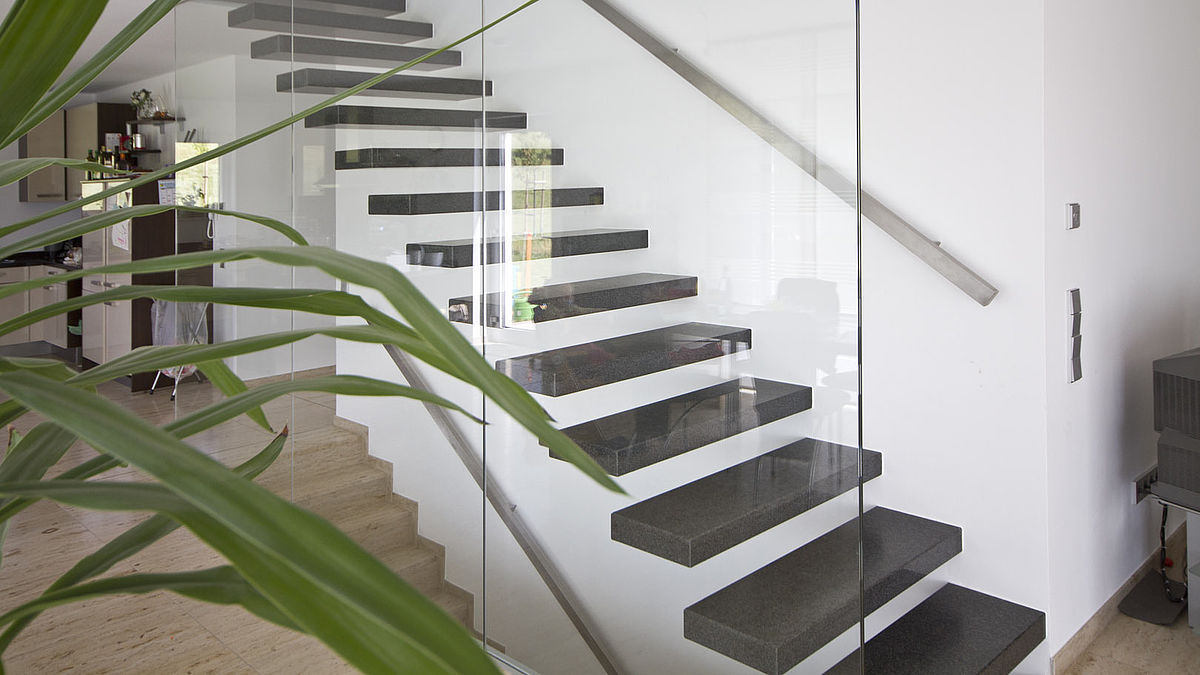
Impala Scuro Treppen

Impala Scuro

Kiehlmann Naturstein

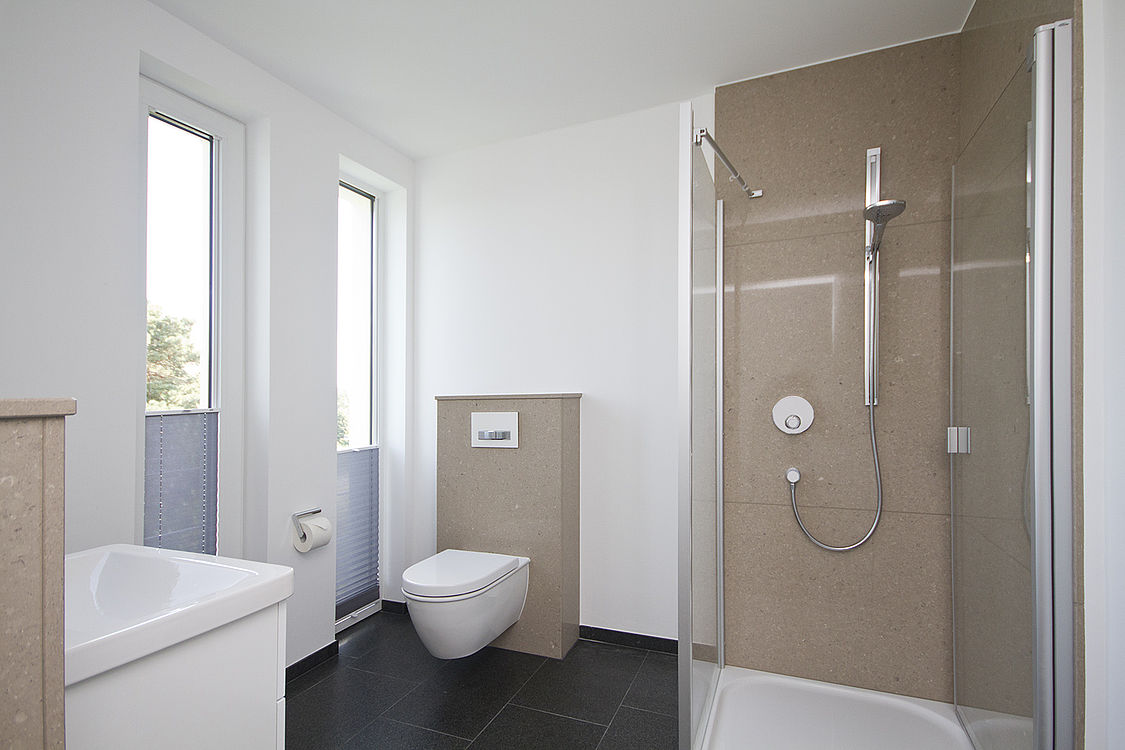
Caesarstone 4230 Shitake / Impala Scuro Bäder

Caesarstone 4230 Shitake / Impala Scuro

Kiehlmann Naturstein

Check the live stock Request an appointment